
What is Atrophotography and Star Trail photography?
Astro and Star trails photography are more than just a photo technique.
Are an emotional journey through the discovering of emotions and the deep space, a space invisible to our naked eye.
With astro and star trails photography you will discover and actually being able to see things that are lights year away .
Whats the difference between Astro and Star trails photography?
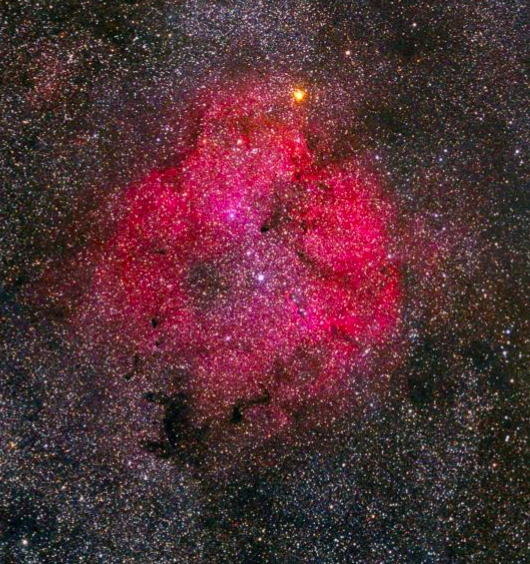
Astrophotography is the practice of taking photographs of celestial objects and phenomena in the night sky. It blends astronomy and photography, requiring both technical skill and artistic vision to capture images of stars, planets, the Moon, nebulae, galaxies, and other cosmic scenes.
Categories are wide-field astrophotography (dslr), planet imaging (telescope n camera), deep sky astrophotography (cooled sensor, tracking mounts)
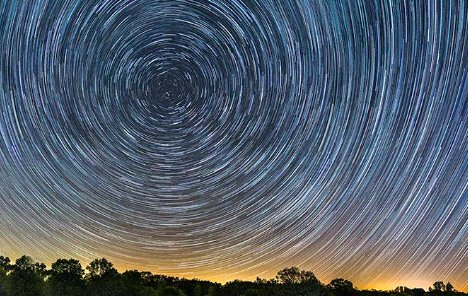
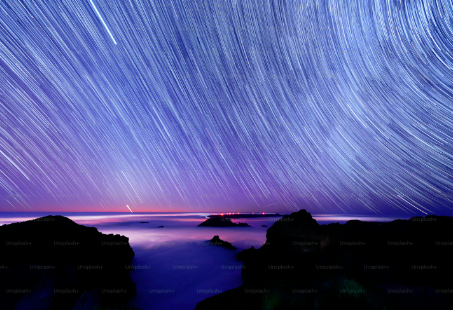
•StarTrail: it’s a form of astrophotoraphy that involves capturing a pictures of a clear sky with thousands of lines of stars streaking across the view.
The stars although are not moving, but rather the Earth is rotating on its axis. Because your camera is on a fixed point grounded to the Earth, the starts appear to be in motion.
Equipment needed:
• DSLR
• Tripod (Strong and steady)
• Low aperture lens
• Remote Control/Intervalometer
•Low pollution filters (L-Pro, UHC filters)
•Star Tracker Head (motorized head)
•Power Bank
•Extra battery
•Headlight with red bulb also
•Big powerful torch
•Lens ring warmer (to avoid fog on the lens)
Softwares and App
Here are a few of the apps we recommend for star trail photography:
•Dark Sky Finder – This app displays a light pollution map for your immediate area. It helps you find the best location for dark skies.
•Deluxe Moon – This app provides you with detailed information about the location and phase of the moon based on your site.
•The Photographer’s Ephemeris – This is a popular and well-known app designed for tracking the Milky Way and galactic core.
•Go Sky Watch – This app allows you to locate and track specific stars and constellations – ideal for finding the celestial pole.
•PhotoPills – This is a comprehensive app for all your astrophotography needs, including tracking stars and even determining ideal camera settings.
•StarStaX – This free app allows you to merge multiple images
•Startrail – Free app for stacking images and also create time lapse videos
•PixInsight – Pro app for Astrophotography and StarTrails
•Lightroom-Photoshop – post production
Technique
• Astrophotography
The starting point is to search and find a dark and low light polluted skies.
Being away from city light (light pollution map).
Focus is delicate and very important action
Its an easy things to do, but it needs attention.
Put on manual focus, adjust it to ∞ then with the help of live screen slightly check a star until is sharply focused and not blurred.
Exposure time (astrophotography) to not get blurred and star trail images, the starting point is to use the 500 rule:
For full frame cameras take 500 and divide it for the focal lenght (ex: 500:the focal length)
APS-C, Micro 4/3 etc cameras: in this case we have more factors to consider:
• APS-C Canon: crop factor ≈ 1.6
•APS.C Nikon/Sony/Fuji: crop factor ≈ 1.5
•Micro 4/3: crop factor ≈ 2.0
At this point we need to multiply the crop factor for the focal length, the result is called Effective Focal Length
Use the EFL in the 500 rule
There are also other things to consider, like the although you are about sharp stars and the direction you are shooting (stars near the celestial equator move faster)
Many photographers now start with a 300 or 400 rule.
• Star Trail Photography
Startrails image can be achieved using two ways:
• single image
• multiple images
One single shot can be risky, as anything can happen during the shot (shaking of a camera, a light passing in front of the lens etc), plus you might get a lot of digital noise.
Instead, with multiple shots (ex. 100 images shots at 30sec each then stacked together in post production), we will have more control of each image.
We do need to do more post production work using lightroom and photos
but, we can correct any problems incurred during entire process.
For both type of star images we need a remote control to avoid any camera shaking.
We always start with high ISO: minimum 800 ISO then always experiment
Planning
Planning is a very important step to achive great results in Star Photography.
Unless the subject is the moon, the absent of it is essential for a dark sky.
Moon light is a very strong source of light pollution, a sky without a moon is for sure a darker sky therefore more stars can be recorded in out final image.
Moon phase follow this path:
New Moon > Waxing Crescent > First Quarter > Waxing Gibbous > Full Moon > Waning Gibbous > Third Quarter > Waning Crescent
s
If we shooting a circular star trails photography the first step is to locate the point of reference
The best reference point for star trails is the stars themselves. If in the northern hemisphere, locate the North Celestial Pole, which is the North Star or Polaris it’s in direct alignment with the earth’s axis.
condividi ora